Slices
Prepare
Reflect on this prayer by Lancelot Andrewes (1555–1626): ‘Lord, be thou within me, to strengthen me … beneath me to uphold me; before me to direct me; behind me to keep me from straying; round about me to defend me. Amen.’
Bible passage
13 It was not through the law that Abraham and his offspring received the promise that he would be heir of the world, but through the righteousness that comes by faith. 14 For if those who depend on the law are heirs, faith means nothing and the promise is worthless, 15 because the law brings wrath. And where there is no law there is no transgression.
16 Therefore, the promise comes by faith, so that it may be by grace and may be guaranteed to all Abraham’s offspring – not only to those who are of the law but also to those who have the faith of Abraham. He is the father of us all. 17 As it is written: ‘I have made you a father of many nations.’ He is our father in the sight of God, in whom he believed – the God who gives life to the dead and calls into being things that were not.
18 Against all hope, Abraham in hope believed and so became the father of many nations, just as it had been said to him, ‘So shall your offspring be.’ 19 Without weakening in his faith, he faced the fact that his body was as good as dead – since he was about a hundred years old – and that Sarah’s womb was also dead. 20 Yet he did not waver through unbelief regarding the promise of God, but was strengthened in his faith and gave glory to God, 21 being fully persuaded that God had power to do what he had promised. 22 This is why ‘it was credited to him as righteousness.’ 23 The words ‘it was credited to him’ were written not for him alone, 24 but also for us, to whom God will credit righteousness – for us who believe in him who raised Jesus our Lord from the dead. 25 He was delivered over to death for our sins and was raised to life for our justification.
Explore
Abraham had been chosen by God to be the founder of a great nation. The trouble was that the father of many nations (v 17) was past parenting (vs 18–20). The first lesson of faith: the poverty of our own resources is no handicap for God.
For Abraham and Sarah, faith was not about getting God to do what they wanted, but rather believing that God could do what he wanted in them. The plan to start a world-blessing nation was God’s promise, not Abraham’s presumption (v 18). The second faith- lesson: faith is taking God at his word, not bending God to ours.
So, if Abraham and Sarah’s poverty was to be drawn into God’s promise, what was the resource for their faith? Faith- lesson three: despite everything that seems set against him, God has the power do what he has promised (v 21).
God’s power has done everything necessary (v 25) to fulfil his promise of making us right with him (v 24). Our own inability to bring that about leaves us where Abraham and Sarah were: needing to have faith despite our poverty!
Respond
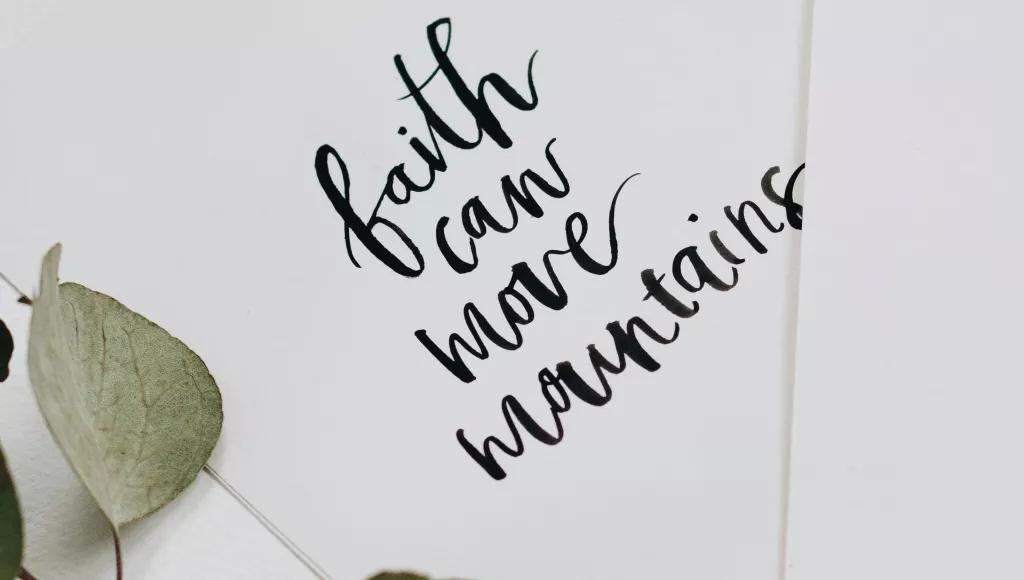
Find a small seed and hold it in your open hand. Reflect on Jesus’ words: ‘if you have faith as small as a mustard seed … Nothing will be impossible for you’ (Matthew 17:20). Keep the seed in your purse or pocket as a reminder.
Bible in a year
Read the Bible in a year: Exodus 25,26; Matthew 27
Pray for Scripture Union
Pray that the training workshops for holiday and mission teams taking place this month will equip team members to plan events which will be fun, safe and effective in introducing children and young people to Jesus.