Slices
Prepare
'I am the light of the world. Whoever follows me will never walk in darkness, but will have the light of life' (John 8:12).
Bible passage
The death of Jesus
33 At noon, darkness came over the whole land until three in the afternoon. 34 And at three in the afternoon Jesus cried out in a loud voice, ‘Eloi, Eloi, lema sabachthani?’ (which means ‘My God, my God, why have you forsaken me?’).
35 When some of those standing near heard this, they said, ‘Listen, he’s calling Elijah.’
36 Someone ran, filled a sponge with wine vinegar, put it on a staff, and offered it to Jesus to drink. ‘Now leave him alone. Let’s see if Elijah comes to take him down,’ he said.
37 With a loud cry, Jesus breathed his last.
38 The curtain of the temple was torn in two from top to bottom. 39 And when the centurion, who stood there in front of Jesus, saw how he died, he said, ‘Surely this man was the Son of God!’
40 Some women were watching from a distance. Among them were Mary Magdalene, Mary the mother of James the younger and of Joseph, and Salome. 41 In Galilee these women had followed him and cared for his needs. Many other women who had come up with him to Jerusalem were also there.
Explore
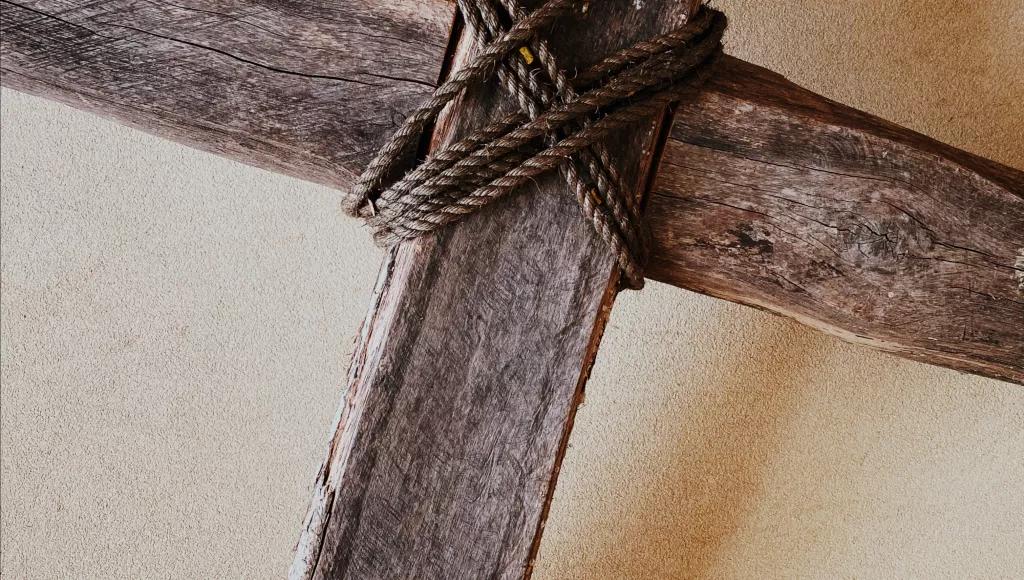
We arrive at the darkest moment of human history, yet when the day is at its height (v33). At the end of three hours Jesus breathes his last; it is finished. Having endured the insults, the mock coronation and the nails to his last breath, it is not until Jesus dies that we get a first positive reaction to that which has passed, and that from one of his crucifiers, the centurion: 'Surely this man was the Son of God!' (v39).
For the first time since 14:1–11, there is female input, again in a caring role and focused on the object of faith. The contrast between the treatment of Jesus by men and by women could not be starker. The men saw Jesus as a logistical problem to be solved, an object of derision, a fraud and criminal. The women watched from a distance and, in faith, cared for Jesus even when all was lost. The hope had gone... hadn't it?
Respond
'Lord, in our darkest moments help us to hold on to the faith that will see us through the darkness to the light of your love.' For 'the light shines in the darkness, and the darkness has not overcome it' (John 1:5).
Deeper Bible study
Pray for a fresh realisation of what the cross of Jesus means for us.
After three hours in the burning sun, darkness comes to cover the intense suffering of Jesus. The taunts are silenced and he is alone with his Father. Ever since Gethsemane, he has been separated from all human support. There he had contemplated the horror of the cup of God’s wrath and asked for its removal. Now he is to drink it. For the only time in his life he addressed his Father not with Abba, but just ‘My God’, quoting the psalmist.1 Mark records, but does not seek to explain, this alienation of the Father from the Son. He does, however, keep us from any false deduction about the inherent deity of the Son, by reporting the clear confession of the centurion.
The crowd hears the cry, interpreting it as a call for Elijah to come: Elijah, who was seen as the precursor of God’s coming to redeem his people. One person wants to help Jesus with a drink, but others wait to see whether Elijah will come. Then Jesus dies. Mark does not record the particulars of his loud cry, but we know that his work is done. Then two things happen. The veil of the Temple is torn. The way into God’s presence is open. The holy place that only the high priest could enter, bearing blood, once a year, is now opened to all Israel for all time. Even more powerful is the response of the pagan centurion, who confesses Jesus as Son of God. Elijah took us back to John the Baptist. The confession takes us to the first verse of the Gospel. Here is the Good News of Jesus, the Son of God. We have reached the conclusion of the story. God has come to visit and redeem his people.
Share with someone else your own conviction about the identity of the crucified one.
1 Ps 22:1
Bible in a year
Read the Bible in a year: Judges 1,2; Romans 16
Pray for Scripture Union
The week-long Kestrels sailing holiday for 14- to 17-year-olds on the Norfolk Broads (led by Tore and Sarah Butlin) was due to start tomorrow but has been cancelled. Instead, 'Virtual Kestrels' will be launching on Saturday evening online and will run throughout the week, with games, Bible reflection, discussion groups and the famous 'logs and shanties'! Pray for the young people and team, that they will have encounters with Jesus during the week's activities and beyond.