Slices
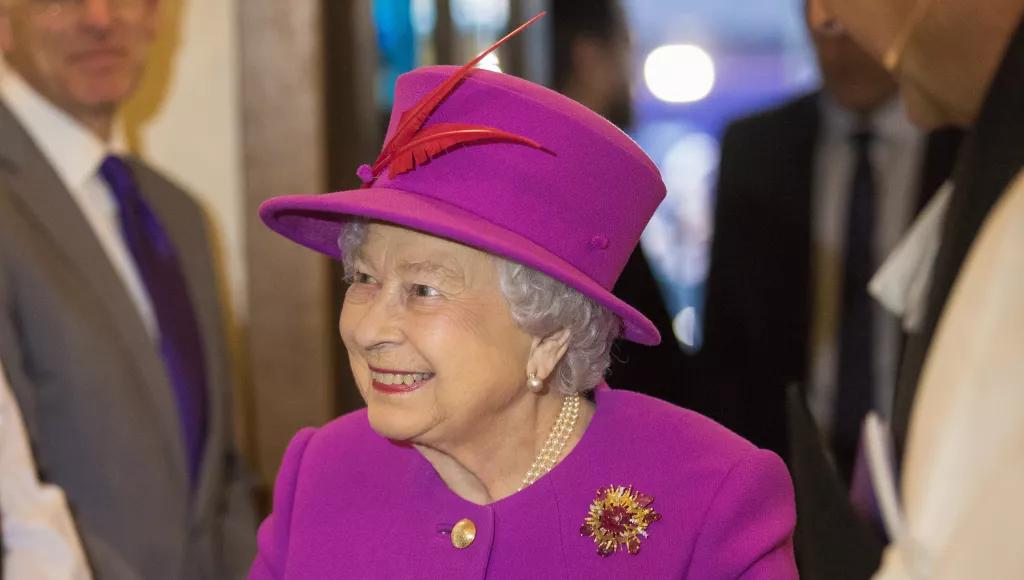
Queen Elizabeth II 1926–2022
For many of us, today is a hugely significant day as the body of Her Majesty Queen Elizabeth II is laid to rest. Since her death on 8 September, she has been the focus of the country and, indeed, much of the world. Millions of words have been written and spoken about her life. For me, one of the biggest surprises has been the number of times her Christian faith has been mentioned. In a secular age such as ours we have become used to personal faith being ignored or dismissed as just a private thing. But, again and again, her faith has been spoken of, even when it wasn’t particularly necessary.
The Queen was open about her faith, without being heavy handed. In her Christmas broadcasts, in particular, she included a personal dimension. In 2014, for example, she said, ‘For me, the life of Jesus Christ, the Prince of Peace, whose birth we celebrate today, is an inspiration and an anchor in my life.’ Again in 2016, ‘… billions of people now follow [Jesus’] teaching and find in him the guiding light for their lives. I am one of them.’
All this has left me thinking, ‘What will people say about me when I die?’ Will people have noticed that I’m a Christian? Will they think to say that my faith was a thread running through my life? Or will it be tacked on to the end of a list of my interests, if at all? The Queen’s example challenges me to be more open about my own faith. The apostle Peter said, ‘Always be prepared to give an answer to everyone who asks you to give the reason for the hope that you have’ (1 Peter 3:15). I want my life to provoke questions about Jesus.
So, I’m praying that King Charles will continue her example – he’s had plenty of training after all! But I’m also praying for myself, that I, too, will be faithful and not afraid to mention Jesus.
Emlyn Williams, editor, Daily Bread
Prepare
What do you deserve from God? Give thanks that we do not receive our just deserts.
Bible passage
Absalom kills Amnon
23 Two years later, when Absalom’s sheep-shearers were at Baal Hazor near the border of Ephraim, he invited all the king’s sons to come there. 24 Absalom went to the king and said, ‘Your servant has had shearers come. Will the king and his attendants please join me?’
25 ‘No, my son,’ the king replied. ‘All of us should not go; we would only be a burden to you.’ Although Absalom urged him, he still refused to go but gave him his blessing.
26 Then Absalom said, ‘If not, please let my brother Amnon come with us.’
The king asked him, ‘Why should he go with you?’ 27 But Absalom urged him, so he sent with him Amnon and the rest of the king’s sons.
28 Absalom ordered his men, ‘Listen! When Amnon is in high spirits from drinking wine and I say to you, “Strike Amnon down,” then kill him. Don’t be afraid. Haven’t I given you this order? Be strong and brave.’ 29 So Absalom’s men did to Amnon what Absalom had ordered. Then all the king’s sons got up, mounted their mules and fled.
30 While they were on their way, the report came to David: ‘Absalom has struck down all the king’s sons; not one of them is left.’ 31 The king stood up, tore his clothes and lay down on the ground; and all his attendants stood by with their clothes torn.
32 But Jonadab son of Shimeah, David’s brother, said, ‘My lord should not think that they killed all the princes; only Amnon is dead. This has been Absalom’s express intention ever since the day that Amnon raped his sister Tamar. 33 My lord the king should not be concerned about the report that all the king’s sons are dead. Only Amnon is dead.’
34 Meanwhile, Absalom had fled.
Now the man standing watch looked up and saw many people on the road west of him, coming down the side of the hill. The watchman went and told the king, ‘I see men in the direction of Horonaim, on the side of the hill.’
35 Jonadab said to the king, ‘See, the king’s sons have come; it has happened just as your servant said.’
36 As he finished speaking, the king’s sons came in, wailing loudly. The king, too, and all his attendants wept very bitterly.
37 Absalom fled and went to Talmai son of Ammihud, the king of Geshur. But King David mourned many days for his son.
38 After Absalom fled and went to Geshur, he stayed there for three years. 39 And King David longed to go to Absalom, for he was consoled concerning Amnon’s death.

Explore
Tam’s wife is a memorable character in Burns’ poem Tam o’ Shanter. What does she have in common with Absalom? Both ‘nursed’ their ‘wrath to keep it warm’.* Tam’s wife waits to give drunken Tam his due on his return. Absalom waits two years for the opportune moment to make Amnon pay for the rape of Tamar. His father David had done nothing. He would ensure justice was done. Shameful experience teaches us that justice for the sexually abused can be quietly ignored. But there are dangers in assuming we are to be the executors of judgement. Which is why Jesus issues his warning against arrogant judgementalism (Matthew 7:1).
Like his half-brother Amnon, Absalom is a skilled schemer but with bigger ambitions. Motivations for exercising judgement on others are almost invariably mixed. For Absalom there was anger and ambition behind his action. He had one eye on the horrendous crime against Tamar, the other on the throne.
Absalom’s haughty stance is apparent when he exhorts Amnon’s assassins by echoing words spoken to Joshua on entering the promised land (Joshua 1:6,7,9). Confusing our human ambition with God’s purpose and failing to recognise the seriousness of our sinfulness (‘if I am guilty’ (14:32) are a clear path to disaster.
*Robert Burns, 1759–1796.
Respond
Do you feel the criticism of judgementalism levelled at Christians is fair? How do we avoid assuming the role of judge that only God can play?
Deeper Bible study
‘Peace I leave … my peace I give … I do not give … as the world gives. Do not let your hearts be troubled and do not be afraid.’1
It doesn’t take much imagination to work out what happened next. Absalom, Tamar’s full brother, waited two years before he took his revenge, maybe waiting to see if David really would let Amnon get away with it. He probably saw Amnon’s murder as a legitimate exercise of justice. The similarity of his plan to that of Amnon and Jonadab is probably not coincidental. David suspected that Absalom’s invitation was not without ulterior motives, although his unwillingness to challenge his sons may have left him with the hope that Absalom had got over Tamar’s rape as easily as David himself seems to have done. In any case, David gave his blessing to Absalom’s party and indeed explicitly allowed Amnon to go, while staying out of the way himself. David was devastated when he thought Absalom had killed all his half-brothers but Amnon’s unpleasant co-conspirator Jonadab, presumably present at the feast, now sought to ingratiate himself with David by bringing reassurance. It was only Amnon that had been killed; and the implication of his comment about the rape is that Amnon deserved to die. Absalom avoided possible repercussions by fleeing to the protection of his (and Tamar’s) grandfather in nearby Geshur – apparently then an independent province in the Golan Heights.
There are a lot of unanswered questions here. Was David expecting Absalom’s action? Was his mourning (v 37) for Amnon or for Absalom? What did Tamar think of all this? What does seem clear is that the writer wants to raise questions in his readers’ minds about David’s failures in parenting and to make it plain that this was a dysfunctional family. Absalom’s action is understandable, but whether it was right or wrong is left for readers to decide.
What do you think Absalom should have done in this situation? What advice would you have given? How significant do you think it is that God is not mentioned in this chapter?
Bible in a year
Read the Bible in a year: Isaiah 37,38; Hebrews 4
Pray for the nation
Thank God for the life and faith of Her Majesty Queen Elizabeth II.
Pray for Scripture Union
Pray for the new Revealing Jesus Sports Pioneers who have recently started working in the north as they seek to encourage and resource churches to make Revealing Jesus a key part of their strategy for reaching children and young people.