Slices
Prepare
When you pray, how do you address God? In this psalm, David uses the two Hebrew words Yahweh and Adonai. God is (his name is too holy to be spoken), and he is Lord of all. Praise him now.
Bible passage
For the director of music. According to gittith. A psalm of David.
1 Lord, our Lord,
how majestic is your name in all the earth!
You have set your glory
in the heavens.
2 Through the praise of children and infants
you have established a stronghold against your enemies,
to silence the foe and the avenger.
3 When I consider your heavens,
the work of your fingers,
the moon and the stars,
which you have set in place,
4 what is mankind that you are mindful of them,
human beings that you care for them?
5 You have made them a little lower than the angels
and crowned them with glory and honour.
6 You made them rulers over the works of your hands;
you put everything under their feet:
7 all flocks and herds,
and the animals of the wild,
8 the birds in the sky,
and the fish in the sea,
all that swim the paths of the seas.
9 Lord, our Lord,
how majestic is your name in all the earth!
Explore
What a lot of word pictures this psalm paints! In verses 1, 3 and 4, I picture an insignificant person gazing up at a vast sky, perhaps looking at a sunset, a rainbow, the stars, or Northern Lights. God’s glory set in the heavens.
Verse 5 evokes a picture of heaven, with God stooping to crown humans with glory and honour, with hordes of angels spectating. It is a puzzle – why does God care for humans so much? Verses 7 and 8 remind me of Genesis 1 and 2, when God brought the living creatures to Adam to name, and charged humans with the responsibility of ruling over everything.
In the middle of all this splendour, verse 2 seems almost incongruous. And yet it is the praise of the babies and little children which leaves God’s enemies totally stumped, with nothing to say. Perhaps this is what Paul was referring to in 1 Corinthians 1:27 when he said, ‘God chose the weak things of the world to shame the strong.’
Respond
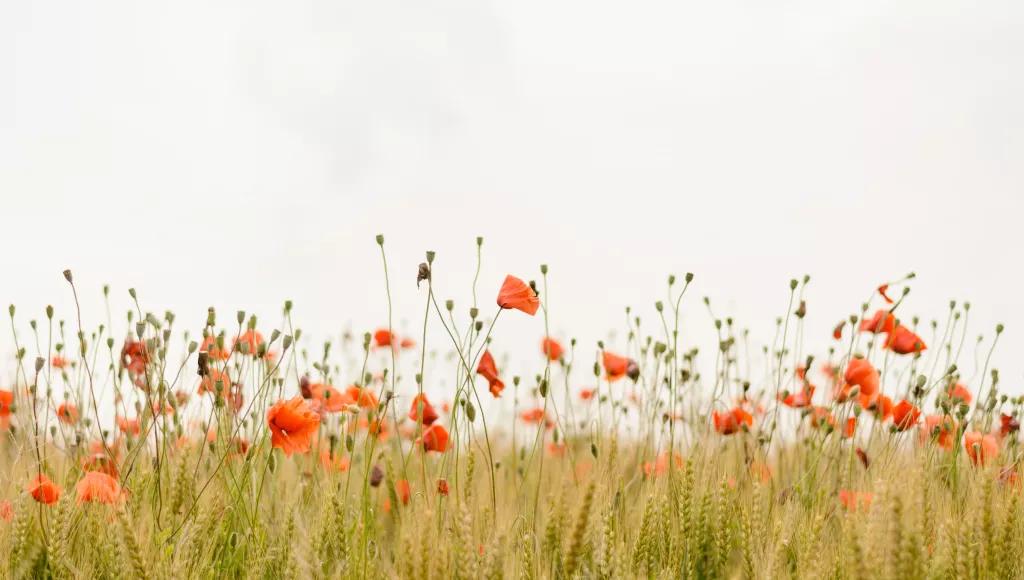
Which of the word pictures in the psalm most cause you to turn to praise? Could you draw, paint or even find an image on the internet that represents something of the majesty of God’s name for you?
Deeper Bible study
‘Summer and winter, and springtime and harvest, / sun, moon and stars in their courses above, / join with all nature in manifold witness / to thy great faithfulness, mercy and love.’1
This psalm was the first Scripture portion to reach the moon, the Vatican’s contribution to 73 messages from world leaders left on the moon’s surface. An inspired choice, its ancient words proclaimed the cosmic sovereignty of God and affirmed the role of humankind. The repeated refrain ‘Lord, our Lord, how majestic is your name in all the earth’ frames the psalm at its beginning and end. Before turning to humankind, the psalmist extends the reach of God’s sovereignty over ‘all the earth’ to ‘in the heavens’ (v 1). The psalmist knew nothing of space, but no astronaut reaching even the remotest planet in the most distant galaxy can move beyond God’s reach. In such a universe, the psalmist asks, what are human beings that God should care about them? They have a status almost equal to heavenly beings, but this status is entirely derived from their relationship to their Creator.
This relationship confers great responsibility. We are to manage the earth, its creatures and their habitats, on behalf of the Creator. God has made us ‘rulers’ of creation (v 6); perhaps the NRSV puts it better: ‘You have given them dominion over the works of your hands’. Christians need to affirm this sacred responsibility, putting us at the forefront of protecting the environment. Christians who claim we need not concern ourselves about the environment, because Jesus will return and restore everything, are fooling themselves and misleading others – indeed they are taking up a position against the will of their Creator. We have dominion but, without recognising God’s claim on us as caretakers of the earth, dominion becomes domination, and selfish, unbridled domination leads to ecological disaster.
‘For the beauty of the earth, / for the beauty of the skies … Lord of all to thee we raise / this our joyful hymn of praise.’2
1 Obadiah Chisholm, 1866–1960, ‘Great is thy faithfulness’ 2 Folliott Sandford Pierpoint, 1835–1917
Bible in a year
Read the Bible in a year: Proverbs 15,16; 1 Thessalonians 1
Pray for Scripture Union
Pray that the new website Raamattu Startti developed by SU Finland and based on the E100 youth Bible reading programme will be widely used and that it will help many individuals and groups to understand more about what God is saying to them.